

Loop Engineering: Why This New AI Method Is Making Headlines in 2026
Loop engineering is a method that involves designing autonomous loops for AI agents, capable of acting, checking their work, and starting again without waiting for a new human prompt.
Loop engineering is becoming one of the new buzzwords in artificial intelligence in 2026. Behind this expression, still relatively unknown to the general public, lies a simple idea: instead of manually typing a prompt at each step, the user designs an AI agent loop capable of defining the next action, checking the result, correcting errors, and continuing until a specific goal is reached.
The topic gained momentum in June 2026, driven by discussions around Claude Code, OpenAI Codex, and new workflows for autonomous AI agents. Business Insider dedicated an article to this trend on June 20, 2026, explaining that some AI engineers no longer simply write prompts: they now design loops that prompt agents on their behalf.
What Is Loop Engineering?
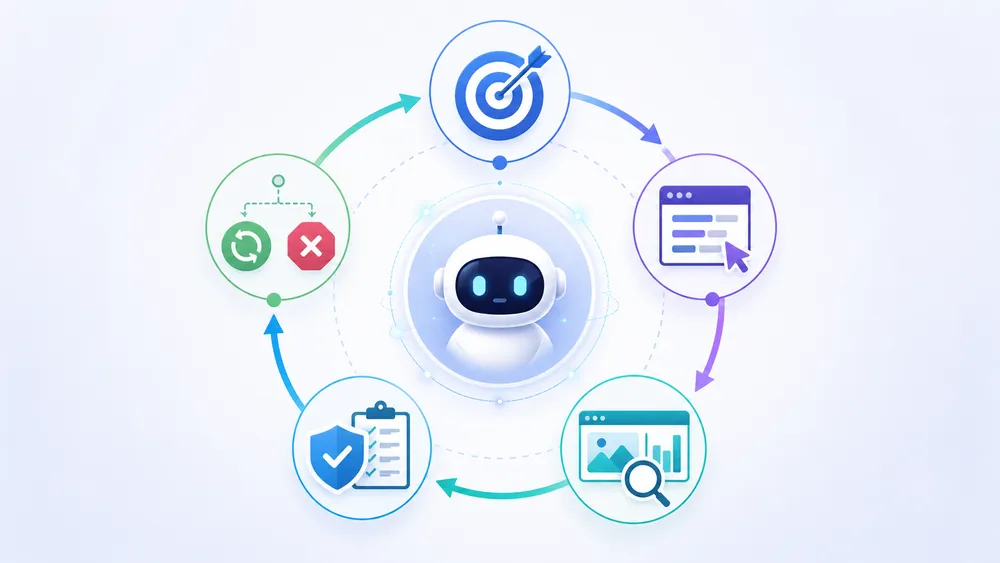
Loop engineering consists of designing a system that automatically prompts, guides, checks, and relaunches an AI agent. While prompt engineering aims to formulate the best possible instruction, loop engineering aims to create a complete loop: goal, action, observation, correction, validation, and stop condition.
ExplainX defines loop engineering as the practice of designing systems capable of prompting AI agents autonomously, instead of manually entering each prompt yourself. The site presents this approach as an evolution of prompt engineering in the age of AI agents.
The difference is important. With a classic prompt, you ask: “Write me an article,” “fix this code,” or “analyze this file.” With a loop, you ask instead: “Monitor this task, move forward step by step, test the result, fix the errors, and stop when the success criterion is met.”
In other words, the prompt becomes one building block. The real leverage shifts to the design of the system around the agent: the trigger, tools, memory, permissions, tests, and stop condition.
Why Is Everyone Talking About Loop Engineering Now?
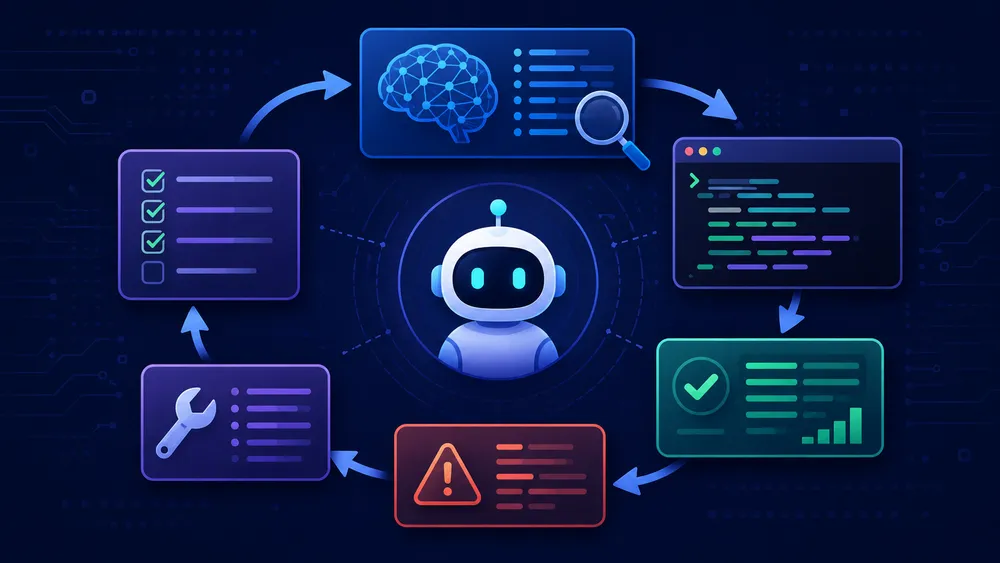
Loop engineering is becoming visible in 2026 because AI agents are now capable of handling longer, more complex, and more autonomous tasks. Tools like Claude Code and OpenAI Codex can plan, modify, test, observe errors, and start again, making loops far more useful than a simple isolated prompt.
This trend did not appear out of nowhere. For several years, the use of generative AI focused heavily on the quality of prompts. This is what we call prompt engineering, a topic we have already explained in our guide on what prompt engineering is.
But with AI agents, the question changes. It is no longer only about formulating a good request. It is now about knowing how to orchestrate a system that can work over time.
In its article, Business Insider quotes Boris Cherny, the creator of Claude Code, explaining that he no longer writes many prompts himself: an agent prompts Claude and coordinates the work. The article also cites Peter Steinberger, an engineer at OpenAI, who encourages users not only to “prompt” coding agents, but to design loops that guide them.
This shift is also visible in the documentation and experiments around Codex. OpenAI published an example of a long-running task where Codex ran for around 25 hours, used roughly 13 million tokens, and generated about 30,000 lines of code. OpenAI notes that this was an experiment, but the example illustrates the move toward long-running, iterative tasks.
Loop Engineering vs Prompt Engineering: What’s the Difference?
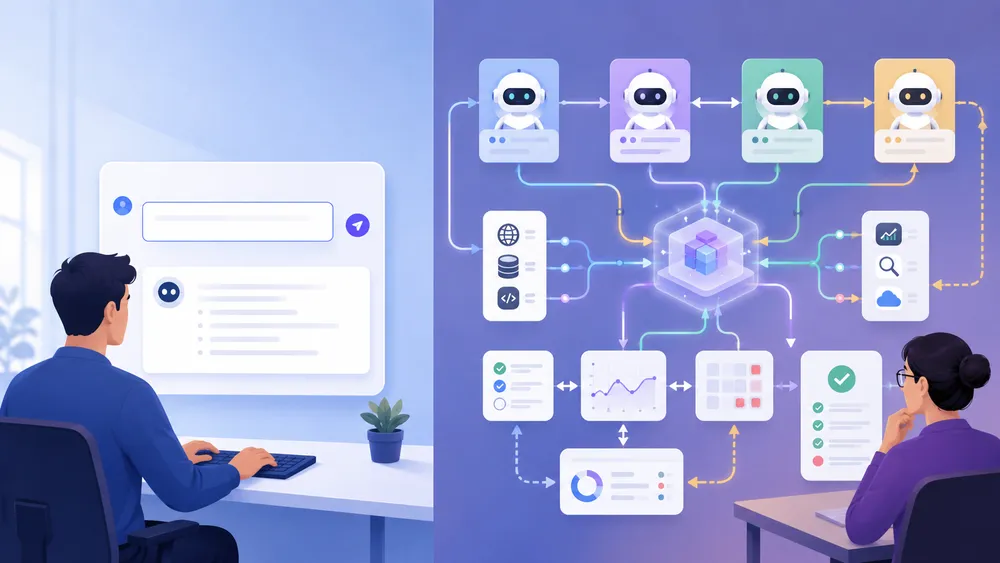
Prompt engineering optimizes an instruction. Loop engineering designs a system that uses multiple instructions, tools, and checks within a loop. Prompt engineering remains useful, but it becomes a skill included in a broader logic: the orchestration of AI agents.
Prompt engineering answers one question: how can you write a better request to get a better answer? It remains a useful skill, especially for structuring a task, setting a tone, providing context, or defining an output format. It is also the foundation of more advanced techniques that we covered in our article on advanced prompt engineering.
Loop engineering, on the other hand, answers another question: how can you create a system that works without a human having to intervene at every step?
Here is the difference in practice:
| Element | Prompt Engineering | Loop Engineering |
|---|---|---|
| Unit of work | A prompt or a conversation | A complete loop |
| Human role | Giving the instruction | Designing the system |
| Duration | A few seconds or minutes | Minutes, hours, or even longer |
| Expected result | An answer | A verified result |
| Main risk | Bad prompt | Bad loop, high cost, repeated error |
| Key skill | Formulation | Architecture, verification, control |
The key point is this: prompt engineering is not dead. It is simply becoming a foundational layer. Loop engineering adds a higher-level logic of system design, control, and repetition.
How Does an AI Agent Loop Work?
An AI agent loop generally follows a cycle: goal, action, observation, verification, correction, then repetition or stop. The quality of the loop mainly depends on three elements: a measurable goal, a reliable verification method, and a clear stop condition.
A well-designed loop starts with a verifiable goal. For example: “all tests must pass,” “critical errors must be fixed,” “priority tickets must be classified,” or “an article draft must follow this specific outline.”
Next, the agent has a set of authorized actions: reading a file, modifying code, consulting a database, calling an API, running a test, generating a summary, or requesting human validation.
After each action, the agent observes the result. It can read logs, analyze an error, compare the result with the criteria, then decide whether to continue, correct, delegate to a sub-agent, or stop.
OpenAI describes this type of behavior in Codex as an approximate loop: planning, editing code, running tools, observing results, fixing errors, updating documentation, then repeating.
This is precisely the logic that turns the AI agent into a semi-autonomous collaborator. The user no longer writes every micro-instruction. Instead, they design the framework in which the agent can act.
Which Tools Are Involved in Loop Engineering?
The tools most often associated with loop engineering today are Claude Code and OpenAI Codex, because they are designed for long, technical, and iterative tasks. But the concept can also apply to no-code agents, business assistants, automation workflows, and multi-agent systems.
In the OpenAI Codex ecosystem, subagents make it possible to launch specialized agents in parallel, then gather their results into a single response. OpenAI explains that these workflows are useful for complex and parallelizable tasks, but that they consume more tokens than running a single agent.
On the Claude Code side, hooks make it possible to automatically run shell commands, HTTP endpoints, or LLM prompts at specific moments in the Claude Code lifecycle. This logic is directly connected to loop engineering, because it allows users to automate checks, validations, or blocks while the agent is working.
The Claude Code documentation also mentions the possibility of locking tool access with permissions, using hooks to audit or transform tool calls, and outsourcing certain tasks to subagents to keep the main context lighter.
But it would be reductive to limit loop engineering to code. A marketing agent can monitor trends, suggest topics, generate briefs, and request validation. A support agent can classify tickets, draft replies, and alert a human on sensitive cases. An SEO agent can analyze a page, check links, suggest optimizations, and produce a checklist.
What Are the Benefits of Loop Engineering?
The main benefit of loop engineering is reducing repetitive manual intervention. A good loop allows an AI agent to work for longer, check its own progress, correct certain errors, and deliver a more complete result than a single prompt.
The first benefit is time savings. Where a user previously had to relaunch the AI at every step, the loop can chain several actions together. It can find the problem, suggest a solution, test it, fix it, and start again.
The second benefit is specialization. One agent can produce, another can review, and a third can test. Business Insider also points out that a common pattern is to separate the agent that writes from the system that verifies, to avoid having the same model judge its own work too favorably.
The third benefit is reproducibility. A well-documented loop can be relaunched every day, every week, or after every event. This is useful for site maintenance, bug tracking, competitive monitoring, content production, or data analysis.
For content professionals, loop engineering could become a complementary skill to prompt engineering. Knowing how to write a good prompt will no longer be enough. You will also need to know how to turn that prompt into a reusable, controlled, and measurable process. This is also what could push the prompt engineer role toward positions closer to AI agent architect.
What Are the Risks and Limits of Loop Engineering?

Loop engineering can amplify errors if the loop is poorly designed. An AI that makes a mistake once can make the same mistake several times, consume a large number of tokens, perform the wrong actions, or stop too early. Guardrails, logs, permissions, and human validation remain essential.
The first risk is economic. Loops consume more resources than a simple prompt. OpenAI explains that workflows with subagents consume more tokens, because each subagent performs its own model and tool work.
The second risk is operational. A loop without a proper stop condition can run for too long, repeat the same errors, or produce unnecessary corrections. A loop with a vague objective can generate a result that is difficult to evaluate.
The third risk is security-related. OWASP has published a Top 10 dedicated to agentic applications for 2026, presented as a framework targeting the critical risks of autonomous AI systems capable of planning, acting, and making decisions in complex workflows.
The NIST also reminds us that AI risk management must include reliability, security, resilience, transparency, and accountability in the design, development, use, and evaluation of AI systems.
In short: the more autonomy an agent has, the more tightly its actions must be controlled. Loop engineering should not be understood as a magic button, but as a discipline of architecture and control.
Will Loop Engineering Replace Prompt Engineering?
No, loop engineering will not completely replace prompt engineering. It extends it. Prompts are still necessary to define roles, objectives, constraints, and success criteria. But the most strategic skill becomes the ability to design a reliable, verifiable, and controllable loop.
The phrase “prompt engineering is dead” is catchy, but misleading. In reality, prompt engineering is becoming a foundational skill, like knowing how to write a good instruction or a good brief. Loop engineering adds a higher layer: the system that executes, observes, and corrects.
This shift resembles an evolution in the human role. The user becomes less of a “prompt writer” and more of an AI agent manager. They define the work, the limits, the quality controls, and the moments when a human must step back in.
This is a major evolution for developers, but also for marketing, product, support, editorial, and SEO teams. Tomorrow, the difference will not only be between those who know how to use ChatGPT and those who do not. It will be between those who send isolated prompts and those who design AI systems capable of working over time.
How Can You Start Safely with Loop Engineering?
To get started with loop engineering, you should choose a simple task, define a measurable goal, limit the agent’s permissions, add a stop condition, and keep human validation in place. The first loop should not act on a critical system without supervision.
The best approach is to start small. For example: ask an agent to monitor a task list, classify tickets, generate a report, check an article outline, or suggest corrections without applying them automatically.
A good first loop should contain five elements: a trigger, a clear goal, authorized actions, a verification method, and minimal memory. If one of these elements is missing, the loop becomes fragile.
You also need to document decisions. Why did the agent relaunch an action? Why did it stop? Which files did it modify? Which tests did it run? Without logs, loop engineering becomes difficult to audit.
Finally, you need to keep a human in the loop for all sensitive actions: publishing, deletion, payment, production code changes, access to private data, or sending messages to customers.
Conclusion: Buzzword or Real Shift?
Loop engineering is still a young term, but it describes a real shift. Generative AI is no longer limited to producing an answer after a prompt. It is entering a phase where AI agents can act, check, correct, and start again in increasingly long workflows.
For now, the trend is especially visible in software development with Claude Code and OpenAI Codex. But its impact could go beyond code. In the coming months, teams using AI for support, marketing, product, monitoring, or writing will likely adopt similar loops.
So the real question is not: “Should we stop learning prompt engineering?” The answer is no. The real question is: “How can we turn good prompts into reliable, repeatable, and controlled systems?”
That is exactly where loop engineering becomes important. It does not promise magical AI. On the contrary, it demands more rigor: measurable objectives, tests, guardrails, logs, and human validation. In 2026, knowing how to prompt remains useful. But knowing how to design the loop that prompts on your behalf could become one of the most strategic AI skills.
