

NVIDIA and KAIST open a joint agentic AI lab in Seoul: innovation push or deeper platform dependence?
NVIDIA and the Korea Advanced Institute of Science and Technology have launched a joint AI research lab focused on agentic AI, placing South Korea more firmly in the global race to build the next generation of autonomous AI systems.
The announcement was published on July 23, 2026, through official NVIDIA channels and later confirmed by KAIST on July 24. The lab will be based at the KAIST Kim Jaechul Graduate School of AI in Seoul and will focus on agentic AI models and AI agent systems designed for South Korea’s language, industries and national AI ambitions.
NVIDIA is helping KAIST build an agentic AI lab. The deeper question is more strategic: is South Korea building a more sovereign AI capability, or is it becoming even more embedded in the NVIDIA technology stack?
What is the NVIDIA KAIST agentic AI lab?
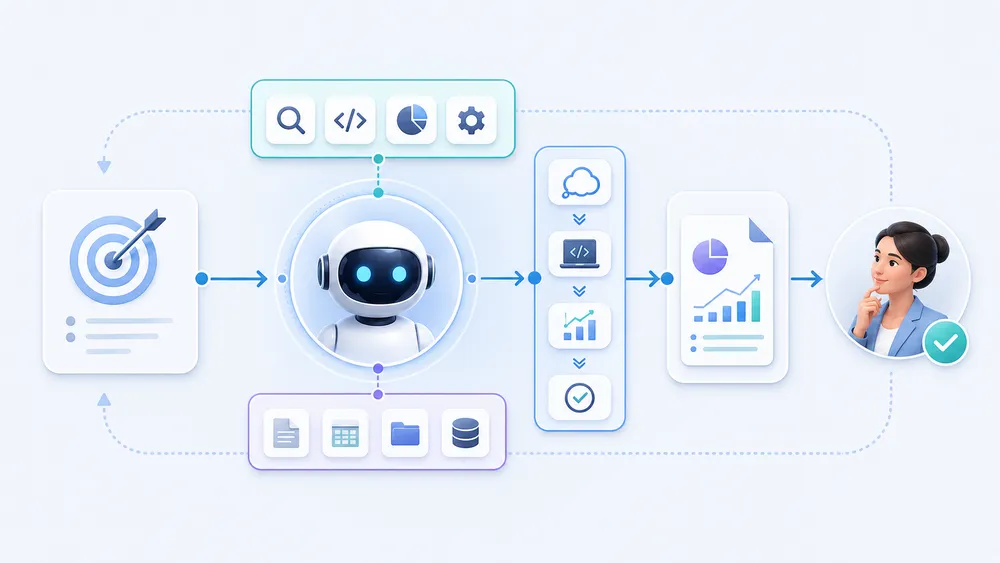
The NVIDIA KAIST agentic AI lab is a joint research laboratory created by NVIDIA and KAIST to develop agentic AI systems for Korea. Unlike a standard chatbot, an AI agent is designed to plan, use tools, perform multi-step tasks and operate across workflows with more autonomy.
According to NVIDIA, the lab will combine NVIDIA’s full-stack AI expertise, NVIDIA Nemotron open models, computing resources from local NVIDIA AI Cloud partners and the scientific talent of KAIST. The goal is to develop models optimized for the Korean language and for Korea-specific use cases, with a pipeline from academic research to enterprise and national deployments.
This is not a small symbolic partnership. NVIDIA says the collaboration is valued at $300 million over an initial five-year period, including $50 million per year in compute contributions. The project will also fund at least 10 KAIST researchers annually, provide internship opportunities at NVIDIA, and create potential full-time pathways for top Korean AI researchers.
KAIST describes the lab as Asia’s first joint AI research lab between NVIDIA and a university, built to advance next-generation agentic AI tailored to the Korean language and domestic industries.
Why the NVIDIA KAIST agentic AI lab matters
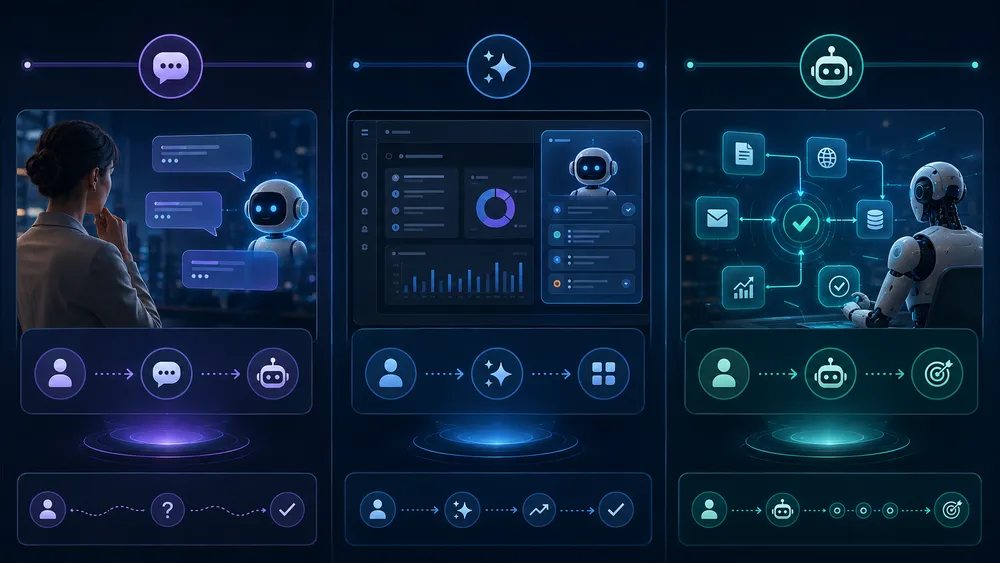
This announcement matters because agentic AI is becoming one of the most strategic frontiers in artificial intelligence. The market is moving beyond chatbots that answer questions. The new race is about systems that can reason through tasks, coordinate tools, work with enterprise data, automate workflows and eventually connect with robotics, industrial systems and physical AI.
For South Korea, this is a national competitiveness issue. The country already has major strengths in semiconductors, memory, electronics, robotics, telecom and advanced manufacturing. But in the AI race, hardware strength alone is not enough. Sovereignty also depends on models, software frameworks, cloud infrastructure, datasets, talent pipelines and developer ecosystems.
That is where NVIDIA becomes unavoidable. The company is not only a GPU supplier. It is increasingly a platform company: chips, software, models, developer tools, simulation systems, cloud partnerships and enterprise deployment layers. A university lab built around NVIDIA technologies can accelerate research, but it can also shape the tools and habits of the next generation of Korean AI engineers.
For KAIST, the upside is clear: access to world-class compute, international research collaboration, funding, internships and direct connection with one of the most powerful companies in global AI. For NVIDIA, the benefit is equally clear: long-term ecosystem adoption in one of Asia’s most advanced technology markets.
What NVIDIA and KAIST do not clearly say
The official announcement is more detailed than many technology partnerships, especially on funding and duration. Still, several important questions remain unanswered.
The first is intellectual property. Who will own the models, datasets, evaluation methods, agent frameworks, patents and commercial applications created in the lab? KAIST? NVIDIA? The researchers? A joint entity? The official materials do not clearly define the ownership structure.
The second issue is openness. NVIDIA mentions Nemotron open models, but that does not mean the lab’s future outputs will be fully open source. In modern AI, openness can be partial. A model may be available, while training data, fine-tuning methods, evaluation systems, safety layers or deployment infrastructure remain closed.
The third issue is technology dependence. South Korea may strengthen its local research capability through this partnership, but it may also deepen dependence on a single foreign platform. If researchers build around CUDA, NVIDIA AI Cloud, Nemotron and NVIDIA’s broader software stack, moving away later could be difficult.
That is the central tension: this lab can support Korean AI sovereignty, but it can also reinforce NVIDIA’s position as the default infrastructure layer for advanced agentic AI.
Who can benefit from the NVIDIA KAIST agentic AI lab?
The first beneficiaries are KAIST researchers and students. The lab gives them access to compute, funding, NVIDIA internships and international research exposure. For students working on AI agents, language models, robotics, industrial automation and model optimization, this is a major opportunity.
Korean companies may also benefit if the lab produces systems that solve local industrial problems. The strongest use cases could include manufacturing, semiconductor design workflows, robotics, telecom automation, enterprise assistants, Korean-language AI services and national-scale research infrastructure.
Developers should watch the project closely, but they should not assume immediate access. The announcement does not yet confirm whether the lab will publish reusable models, open benchmarks, APIs, datasets or frameworks. If the results remain mostly inside academic or NVIDIA-controlled channels, the practical benefit for external developers will be limited.
Agentic AI is now becoming a geopolitical research priority. The next phase of AI will not be decided only by OpenAI, Google, Anthropic, Microsoft or Chinese model labs. It will also be shaped by alliances between universities, cloud companies, semiconductor leaders and national innovation systems.
CritiquePlus’s analysis: a strategic win, but not a neutral one
Our view is that the NVIDIA KAIST agentic AI lab is a serious announcement, not just a marketing partnership. The $300 million figure, the five-year period, the compute contributions and the talent pipeline give it real substance.
But it should not be read only as a victory for South Korean AI sovereignty. It is also a major platform victory for NVIDIA.
The company is doing what powerful technology platforms do best: it is entering the research layer, the education layer and the infrastructure layer at the same time. If Korean researchers train on NVIDIA systems, use NVIDIA models and publish work around NVIDIA tooling, the company gains influence long before products reach the market.
That does not make the partnership negative. It may be exactly what South Korea needs to accelerate advanced AI research. But it does mean the word “sovereignty” should be used carefully. True sovereignty requires not only local talent and local use cases, but also control over infrastructure, standards, models, data and intellectual property.
For now, this looks less like full independence and more like negotiated sovereignty: Korea gains research power; NVIDIA gains strategic depth.
Is this a real advance for agentic AI?
Yes, but the proof will come later.
On paper, the lab targets the right frontier. Agentic AI is where many of the most important enterprise and industrial applications are heading. A model that can simply answer a question is useful. A system that can plan, call tools, check results, adapt to a workflow and operate within an organization is far more valuable.
The Korean-language focus is also important. Too much of the global AI stack remains optimized for English-first environments. A lab focused on Korean language, domestic industries and local deployment could produce more useful systems for South Korean companies and public institutions.
But CritiquePlus will judge this lab by outputs, not promises. The key indicators will be published research, open models, reproducible benchmarks, industry pilots, licensing terms, patent activity and whether Korean startups can build on the lab’s work without becoming locked into a single vendor ecosystem.
What to watch next
The most important question is intellectual property. If the lab produces valuable models or agent frameworks, ownership rules will determine whether the work becomes a national asset, a commercial NVIDIA advantage, a shared academic output or a restricted industrial resource.
The second point is publication policy. Will researchers be free to publish results? Will models be released? Will developers outside KAIST and NVIDIA be able to test them?
The third point is industrial transfer. The project will matter much more if its research reaches Korean companies in robotics, semiconductors, manufacturing, telecom, healthcare, education and public services.
The fourth point is infrastructure diversity. If the entire lab depends on NVIDIA infrastructure, Korea may gain AI acceleration but not full strategic independence.
CritiquePlus verdict
The NVIDIA KAIST agentic AI lab is a strong and credible move. It has funding, infrastructure, institutional weight and a clear technological direction. For KAIST, it is a major opportunity to strengthen Korea’s position in advanced AI research. For NVIDIA, it is a long-term ecosystem play in one of Asia’s most important technology markets.
CritiquePlus sees this as a strategic signal rather than an immediate product revolution. The lab should be watched closely, especially by researchers, developers, cloud providers, policymakers and companies working on AI agents.
The recommendation is clear: do not overhype it as instant Korean AI independence. But do not dismiss it either. This is exactly how platform influence is built in the AI era: through compute, research, talent and standards.
Key takeaways
NVIDIA and KAIST have launched a joint agentic AI lab in Seoul.
The collaboration is valued at $300 million over an initial five-year period, including $50 million per year in compute contributions.
The lab will focus on AI agents and models optimized for Korean language and domestic industry needs.
The biggest unanswered question is intellectual property.
The project strengthens South Korea’s AI research capacity, but it may also deepen dependence on the NVIDIA technology stack.
Official sources used
NVIDIA Investor Relations — “NVIDIA and KAIST Launch Joint AI Research Lab to Accelerate AI Innovation in Korea,” published July 23, 2026.
NVIDIA Blog — “At AI Summit, South Korea Outlines Its AI Future With NVIDIA and Partners,” published July 23, 2026.
KAIST News Center — “KAIST-NVIDIA Establish Asia’s First AI Joint Research Lab, Accelerating Korea’s AI Innovation,” published July 24, 2026.
